What it looks like for a real seller
Three common shapes of business, and what changes when the whole operation runs from one console. Scenarios are representative, with sample numbers drawn from real workflow patterns.
B2B distributor · the quoting wedge
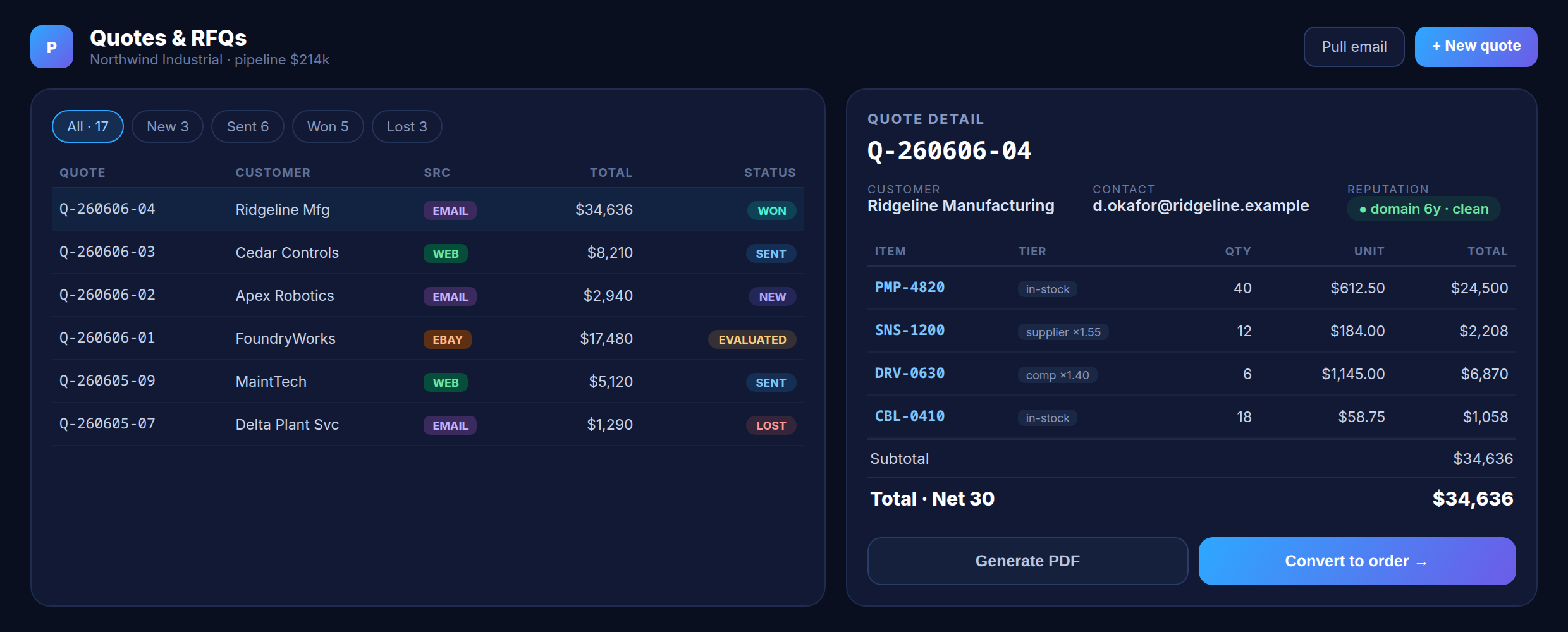
From a two-day quote to a twenty-minute one
Before: A maintenance buyer emails a list of part numbers. A rep digs through the catalog, checks supplier costs in a spreadsheet, eyeballs a marketplace for comps, types up a quote in a word processor, and emails a PDF — two days later, if it doesn’t fall through the cracks. Half never get a follow-up.
After: The emailed request is parsed into a structured quote automatically. Every line is priced against live stock, supplier landed cost, and market comps. The rep reviews, tweaks, and sends a branded PDF in the same thread. Follow-ups fire on their own; a won quote becomes an order with its PO and A/R in one click.
Multi-channel reseller · inventory
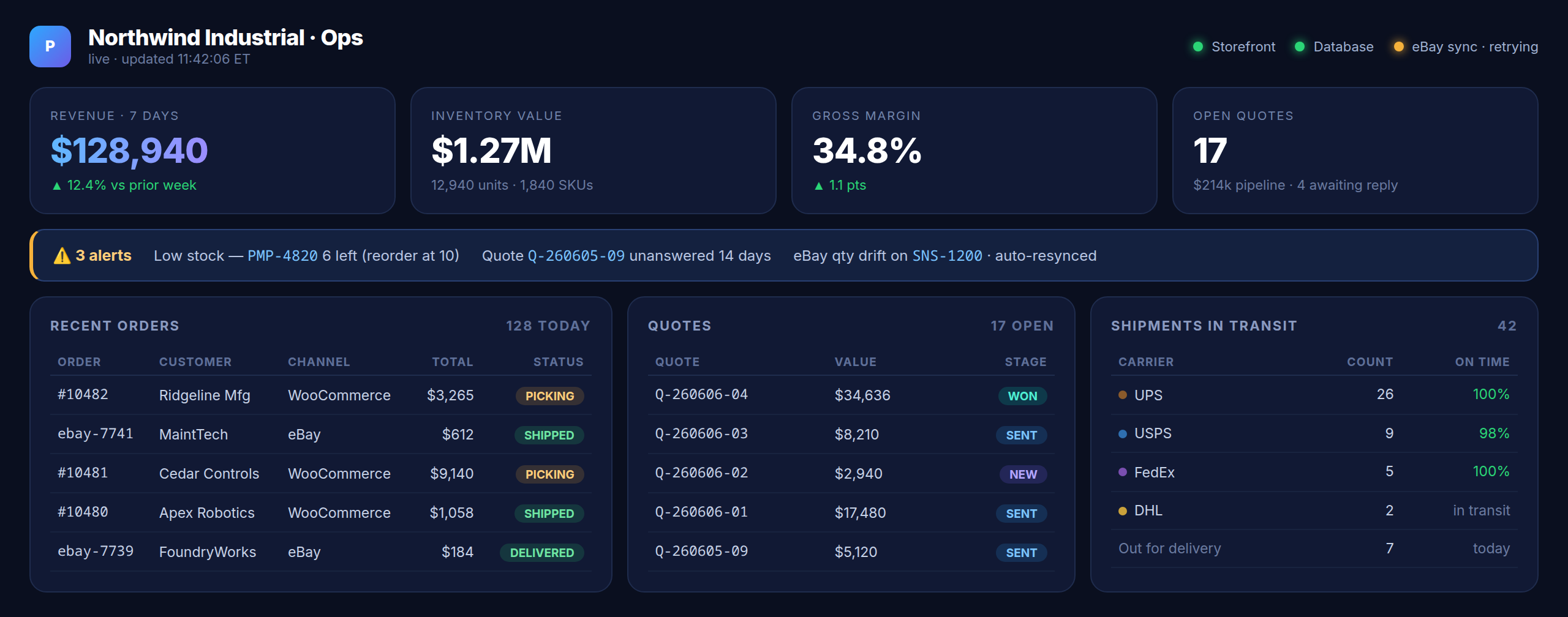
Stop overselling across WooCommerce and eBay
Before: The same SKU sells on the website and eBay. Stock counts drift, a unit sells twice, and someone spends the afternoon apologizing and refunding — then manually editing quantities on both channels.
After: One FIFO inventory ledger is the source of truth. Every order and receipt updates it, and quantities push to both channels on a short cycle. A daily audit catches any drift and re-syncs it before a customer ever sees it.
Growing shop · accounting
Books that keep up with the orders
Before: Sales happen; bookkeeping happens weeks later. Cost of goods is a guess, gateway fees get lumped together, and PO customers muddy the cash picture. Month-end is a scramble.
After: Every order consumes inventory lots oldest-first and posts FIFO cost of goods into double-entry books, with gateway fees split out and purchase-order orders routed to receivables. Bank statements reconcile against what the system already knows.
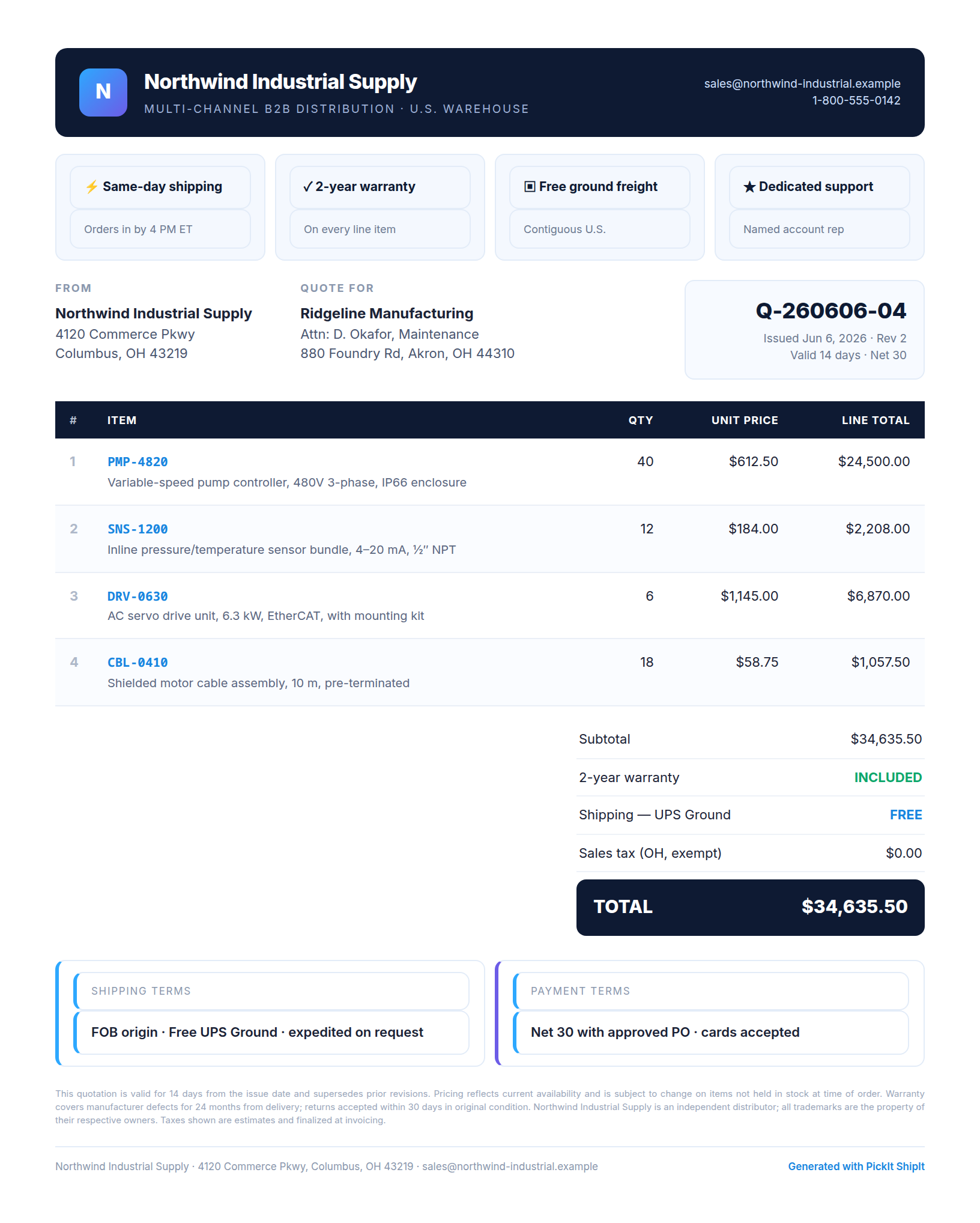
A won quote becomes an order, a PO, and an A/R entry automatically.
Which one sounds like you?
Tell us your channels and volume and we’ll map the wedge that pays off first.
Talk to us See plans